
Most investors don’t fail because they pick the wrong coin. They fail because they have no plan, then buy at the top and sell in a panic. A written plan is your defence.
In this article
Step 1: Set your goal
Why are you investing? Saving for a house in ten years, building a retirement top-up or simply exploring? Your goal decides your time horizon, and time horizon decides how much risk you can take.
Step 2: Choose how much to invest
Only invest money you won’t need soon. Build an emergency fund first, pay off expensive debt and decide a share of your total wealth for crypto. Many people keep it to a small slice, because crypto is volatile.
Step 3: Pick your assets
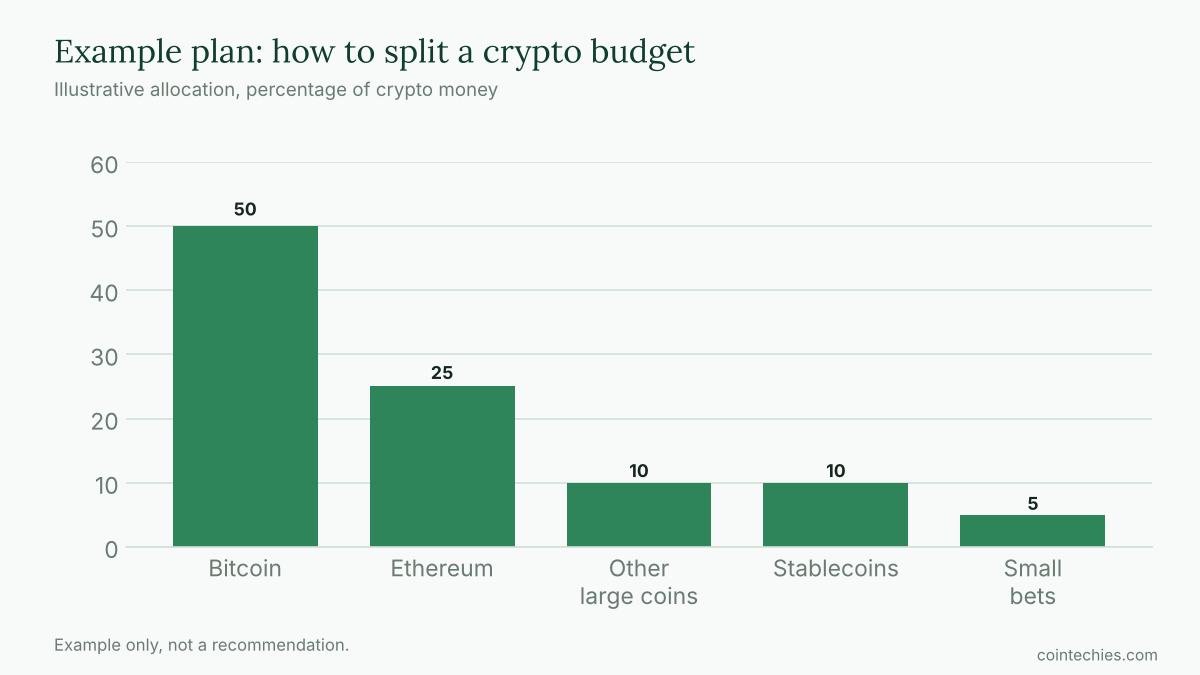
Keep it simple. A common approach is to build around the most established assets and add small amounts of others.
Step 4: Decide how to buy
Choose between a lump sum and regular purchases, and pick your exchange. Automating monthly buys helps you stick to the plan whatever the news says.
Step 5: Plan your safety
Decide where you will store your coins. Many long-term investors move larger holdings to a hardware wallet, back up the seed phrase offline in two places and use two-factor authentication on every account.
Step 6: Set rules for reviewing and selling
Write down:
- When you will review: for example every quarter, not every day.
- When you will rebalance: if one asset drifts far from your target.
- When you might sell: to take profit at a target, to fund your goal or if your reason for owning has changed.
Handle the hard moments in advance
Ask yourself what you will do if your holdings fall 50%. If your honest answer is panic, your allocation is probably too high. Writing it down now makes it easier to act calmly later.
Keep a record
Save dates, amounts and fees of every transaction. It helps with taxes and teaches you from your own decisions.
The bottom line
A good plan is simple enough to follow and specific enough to guide you in a crash. Set a goal, size your risk, choose assets, automate purchases, secure your coins and review calmly. Then let time do the work.
This article is for educational purposes only and is not financial advice. The allocation shown is an example, not a recommendation. Crypto assets are volatile and you can lose some or all of your investment.



Laisser un commentaire