
Nearly everyone who has been in crypto for a few years has a story they would rather not tell. The coin bought at the top because everyone was talking about it. The password nobody wrote down. The « guaranteed » opportunity from a friendly stranger.
The good news is that these mistakes are remarkably repetitive. Beginners tend to stumble over the same ten rocks, and once you know where they are, they’re easy to step around. Here they are, with one simple fix for each.
In this article
- 1. Investing money you can’t afford to lose
- 2. Buying because of FOMO
- 3. Skipping your own research
- 4. Falling for scams and « guaranteed returns »
- 5. Keeping coins in a risky place, or losing your keys
- 6. Overtrading and chasing quick profits
- 7. Putting everything into one coin, or into too many
- 8. Ignoring fees and hidden costs
- 9. Forgetting taxes and records
- 10. Letting emotions run the plan
- The bottom line
1. Investing money you can’t afford to lose
Crypto prices can halve in weeks, and recoveries can take years. Money you need for rent, tuition or bills turns a normal dip into an emergency. Fix: build an emergency fund first, clear expensive debt and never borrow to invest. Our guide on how much to invest in Bitcoin helps you size a position.
2. Buying because of FOMO
By the time a coin is all over social media, much of the gain has usually happened. Emotional buying leads to emotional selling. Fix: decide in advance what to buy and how much, invest on a regular schedule and wait 24 hours before buying anything you just heard about.
3. Skipping your own research
Influencers may be paid, may own the coin or may simply be wrong. Fix: be able to explain each holding in two sentences: what it does, why it matters and how it could fail. Start with the best-documented assets, as in why Bitcoin is still the king of crypto.
4. Falling for scams and « guaranteed returns »
Crypto transactions can’t be reversed, so scammers love it: fake giveaways, support agents who message you first, lookalike websites, romance scams and promises of risk-free profit. Fix: treat unsolicited messages as scams, never share your recovery phrase and type website addresses yourself.
5. Keeping coins in a risky place, or losing your keys
Exchanges can be hacked or collapse, as Mt. Gox did in 2014 and FTX in 2022. Self-custody has its own risk: lose your recovery phrase and nobody can reset it. Fix: use a regulated exchange, consider a hardware wallet for larger long-term holdings and keep your phrase on paper, offline, in two secure places.
6. Overtrading and chasing quick profits
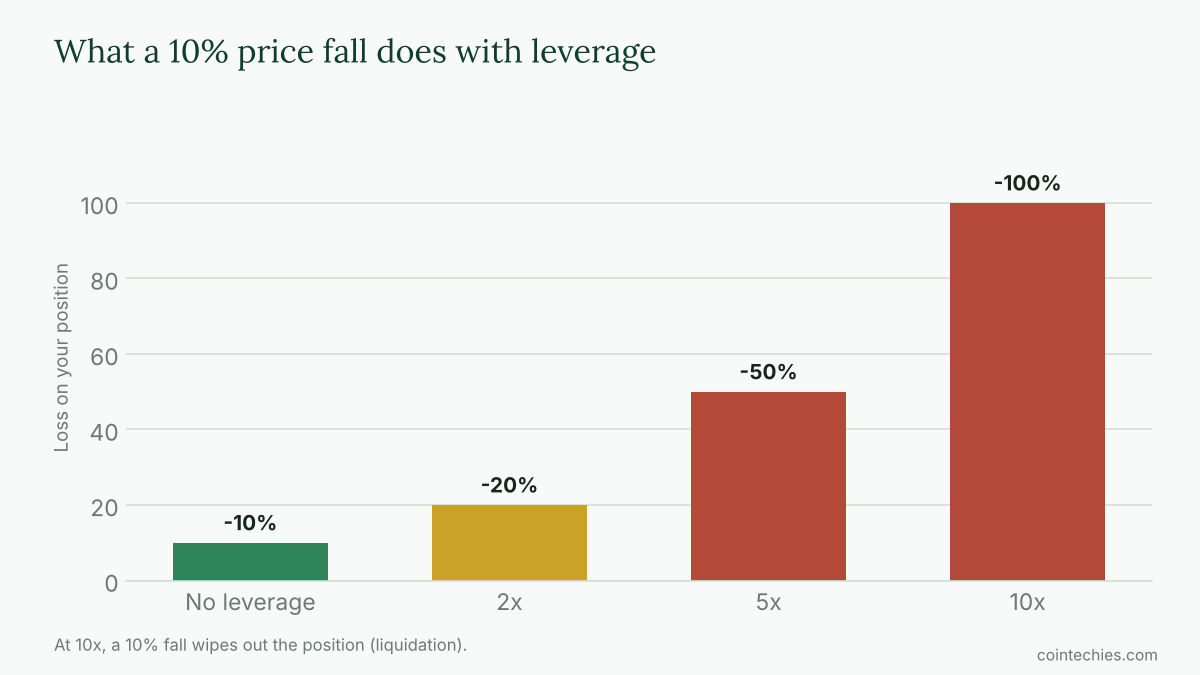
Every trade costs fees and spreads, and every decision is another chance to be wrong. Leverage can wipe out a position on a small move. Fix: default to a long-term plan and read our comparison of crypto trading vs long-term investing before trying anything faster.
7. Putting everything into one coin, or into too many
One small coin can fail completely, while twenty random tokens are hard to follow and usually fall together. Fix: build around established assets and keep speculative bets small. See how in building a balanced cryptocurrency portfolio.
8. Ignoring fees and hidden costs
Trading fees, spreads, card surcharges, withdrawal and network fees all add up, and instant card purchases are usually the most expensive. Fix: compare the total cost, prefer bank transfers and check the network and address before sending anything.
9. Forgetting taxes and records
Selling, swapping and sometimes spending crypto can be taxable, and rebuilding a year of transactions from memory is painful. Fix: keep dates, amounts, prices and fees from day one, export your history regularly and check your country’s rules.
10. Letting emotions run the plan
Euphoria makes people take risks they would never take calmly, and fear makes them sell good assets at the bottom. Fix: write a plan before you buy, automate purchases, check prices weekly rather than hourly and choose a position size that lets you sleep if the price halves.
The bottom line
Almost every beginner mistake comes down to investing too much, acting on emotion, trusting the wrong people or neglecting security. None needs technical genius to avoid. They need patience and a plan. If you want a calm starting point, read how to start investing in cryptocurrency.
This article is for educational purposes only and is not financial advice. Crypto assets are volatile and you can lose some or all of your investment. Tax rules vary by country.