Imagine using a bank with no branches, no staff and no opening hours. You can lend, borrow, trade and earn interest from your own wallet at any time. That is the idea behind DeFi, short for decentralised finance.
In this article
The basic idea
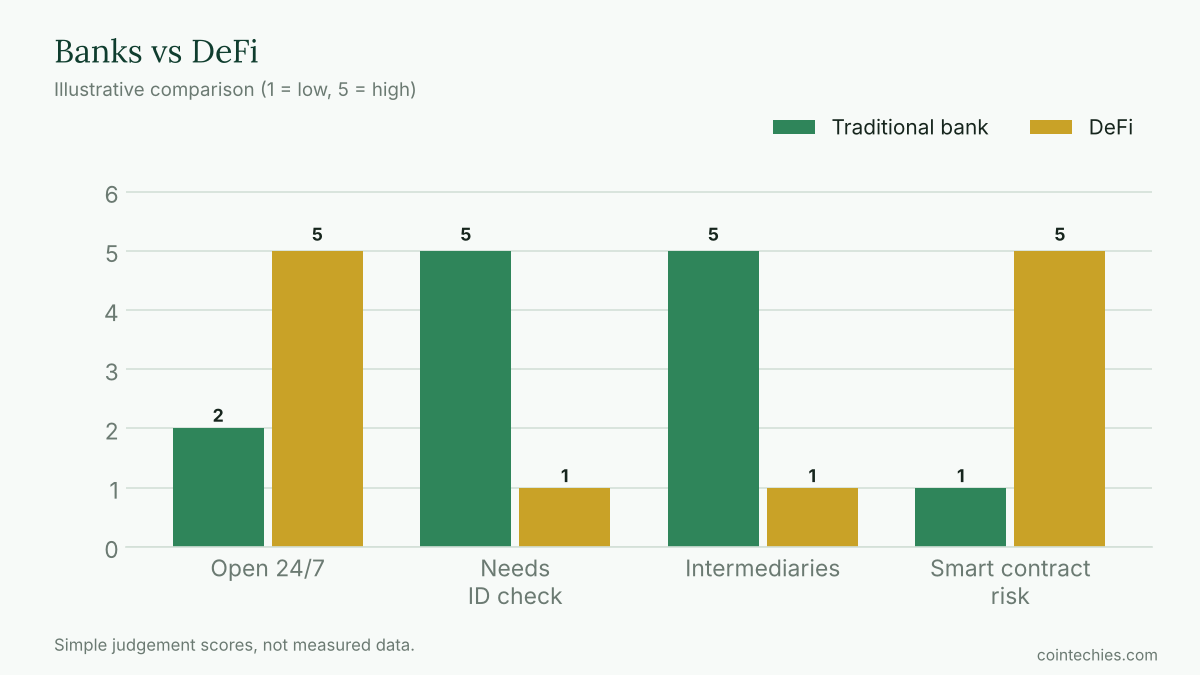
Traditional finance relies on institutions: banks, brokers and exchanges that hold your money and process your requests. DeFi replaces them with smart contracts, programs on a blockchain that carry out the same tasks automatically.
Most of DeFi runs on Ethereum and similar networks. Anyone with an internet connection and a wallet can use it, without opening an account or showing ID.
What can you do in DeFi?
- Trade: swap tokens on decentralised exchanges such as Uniswap.
- Lend and borrow: deposit assets to earn interest, or borrow by locking collateral.
- Earn yield: provide liquidity to trading pools and receive a share of fees.
- Use stablecoins: hold dollar-like tokens and move them globally in seconds.
- Access derivatives and insurance: tools that mimic services of traditional markets.
How lending works
You deposit crypto into a lending protocol’s pool. Borrowers take loans from the pool and pay interest, which is shared with depositors. Because there’s no credit check, borrowers must put up more collateral than they borrow, which protects the lenders. If the collateral’s value falls too far, the contract sells it automatically.
Benefits
- Open access: no bank approval is needed.
- Transparency: code and transactions are public.
- Speed: settlement in minutes rather than days.
- Composability: apps connect like building blocks.
Risks
- Smart contract bugs: hacks have drained many protocols.
- Price swings: volatile collateral can cause liquidations.
- Scams and rug pulls: anyone can launch a token.
- Complexity: mistakes can be permanent.
- Regulation: rules are still evolving.
Getting started safely
Start with small amounts. Use well-known protocols that have been running for years and have been audited. Check you’re on the real website, and be careful with approvals that let a contract spend your tokens. Never invest in something you don’t understand.
The bottom line
DeFi offers financial services without middlemen, but responsibility shifts to you. It can be powerful for those who learn how it works and respect the risks.
Keep reading
This article is for educational purposes only and is not financial advice. DeFi carries risks including loss of funds. Crypto assets are volatile and you can lose some or all of your investment.


Laisser un commentaire