A hardware wallet is a small device that stores your private keys offline and signs transactions inside it. Even if your computer is infected with malware, the keys never leave the device. For serious long-term holdings, it’s the standard choice.
In this article
How they work
When you send crypto, your computer or phone builds the transaction and sends it to the device. You verify the details on the device’s own screen and approve it with a button. The device signs it internally and returns only the signature. The key itself is never exposed.
What to compare
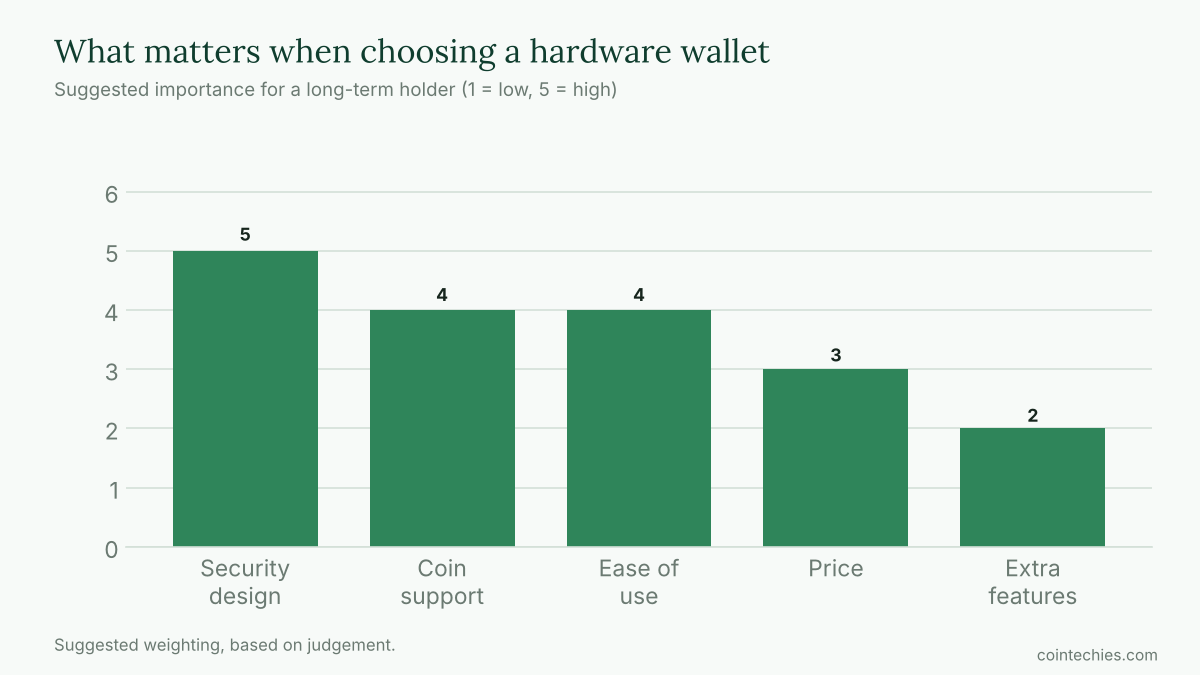
Security design. Look for a secure element chip or an open-source design that has been audited. Each approach has supporters: secure elements protect against physical attacks, while open designs allow public review.
Supported coins. Make sure your assets are supported. Large wallets handle Bitcoin, Ethereum and thousands of tokens, but smaller chains may not be supported.
Screen and buttons. A clear screen lets you check the address and amount, which is essential. Touchscreens are easier; physical buttons can be simpler to trust.
Connectivity. USB is the classic. Bluetooth is convenient for phones, though some people prefer to avoid wireless links. Some models support QR codes or SD cards for fully air-gapped use.
Backup and recovery. All reputable models use a seed phrase of 12 or 24 words. Some offer extra options like passphrases, multi-share backups or metal backups.
Company reputation. Check how long the maker has been around, how it handled past vulnerabilities and whether it has had data leaks. Read independent security reviews.
Price. Typical devices cost from around $60 to $250. Don’t pick purely on price: the cost of a good wallet is small compared with the value it protects.
Well-known options
Ledger, Trezor, Coldcard, Keystone, and others are often discussed. Coldcard focuses on Bitcoin, while Ledger and Trezor cover many coins. Check the latest models and reviews, since products change.
Buying safely
- Buy only from the official store or an authorised reseller.
- Never use a second-hand device or one with a pre-written seed phrase.
- Check for tamper-evident packaging.
- Verify the device with the manufacturer’s official app.
The bottom line
A good hardware wallet is simple, audited and well supported. Choose one that handles your coins, has a clear screen and comes from a reputable maker, buy it directly and protect the seed phrase as carefully as the device.
This article is for educational purposes only and is not financial advice. Product details change, so check the latest information. Crypto assets are volatile and you can lose some or all of your investment.



Laisser un commentaire