Crypto was created outside the traditional financial system, so it should be immune to what central banks do, right? In practice, the opposite has often been true. Since institutions and large investors joined the market, crypto has reacted to the same macro forces as other risk assets.
In this article
What is macro?
Macro refers to big-picture economic factors: interest rates, inflation, growth, currencies and government spending. They shape how much money flows into risky investments.
Interest rates
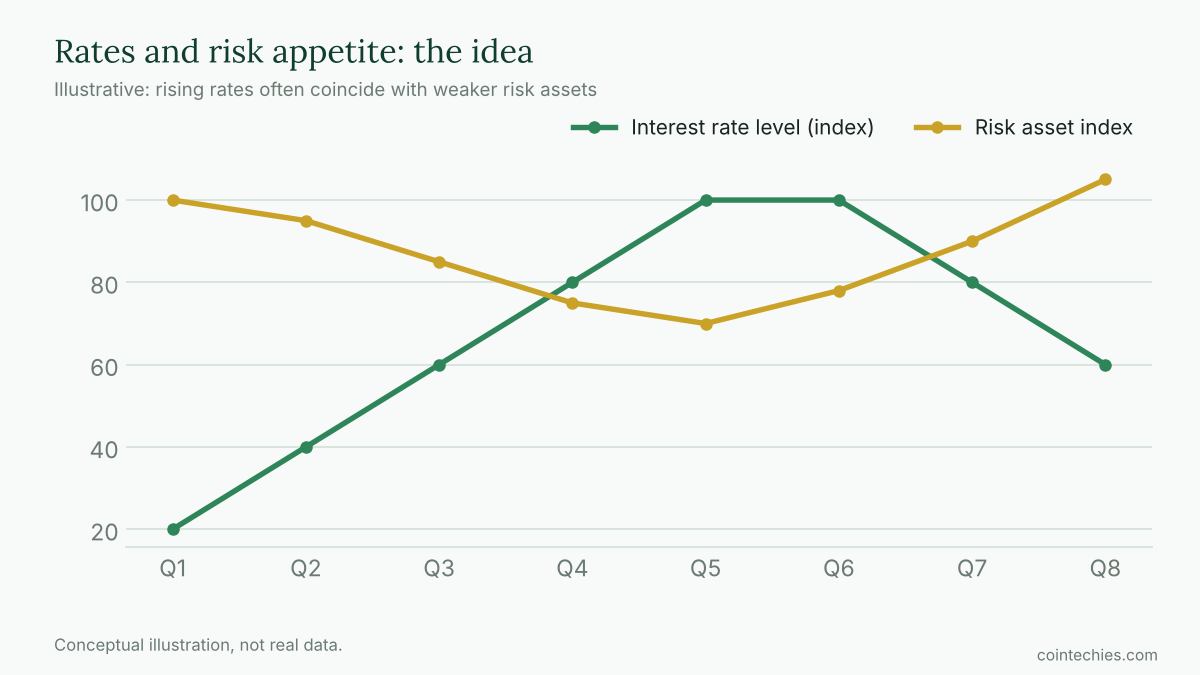
Central banks set short-term rates. When rates are low, safe assets pay little, so investors look further for returns, often into stocks and crypto. When rates are high, bonds and savings accounts become more attractive, and money tends to leave riskier assets.
The 2022 crypto bear market coincided with fast interest rate rises. Later rate cuts and the expectation of them have often supported sentiment.
Inflation
Inflation affects what central banks do. Higher-than-expected inflation can lead to higher rates and market falls. Bitcoin is sometimes called a hedge against inflation, but its record is mixed: it has sometimes fallen when inflation rose, and has behaved more like a risk asset in the short term.
The US dollar
Many crypto assets are priced in dollars. A strong dollar can weigh on global liquidity and asset prices, while a weaker dollar often accompanies stronger risk appetite. Traders watch the dollar index for clues.
Liquidity
Liquidity means how much money is available in the system. When central banks buy bonds or expand balance sheets, liquidity grows and asset prices often rise. When they shrink balance sheets, liquidity tightens.
Economic data and events to watch
- Central bank meetings and statements
- Inflation reports
- Employment data
- Government bond yields
- Geopolitical shocks
Prices can move sharply within minutes of such releases, so many long-term investors simply avoid trading around them.
Correlation is not constant
Bitcoin’s relationship with stocks changes over time. Sometimes they move together, and sometimes not. Treat correlations as tendencies, not laws.
What it means for you
- Accept that crypto is part of the global financial system.
- Don’t assume it will always be a safe haven.
- Follow a few macro indicators without obsessing.
- Rely on a long-term plan rather than reacting to each release.
The bottom line
Rates, inflation, the dollar and liquidity influence crypto prices in important ways. Understanding the links helps you make sense of market moves without trying to predict them.
This article is for educational purposes only and is not financial advice. Crypto assets are volatile and you can lose some or all of your investment.

Laisser un commentaire