Price tells you where the market is, while volume tells you how many people are behind it. Understanding the relationship adds a useful dimension to any chart.
In this article
What volume is
Volume is the amount traded in a period, shown as bars under the price chart. A tall bar means lots of activity. In crypto, remember that volume figures can be inflated by wash trading on some exchanges, so prefer reputable venues.
Basic principles
- Rising price with rising volume: a healthy trend, with real buying.
- Rising price with falling volume: weaker conviction, and a possible fade.
- Falling price with high volume: strong selling, possibly a capitulation.
- Falling price with low volume: a quiet drift, which may lack urgency.
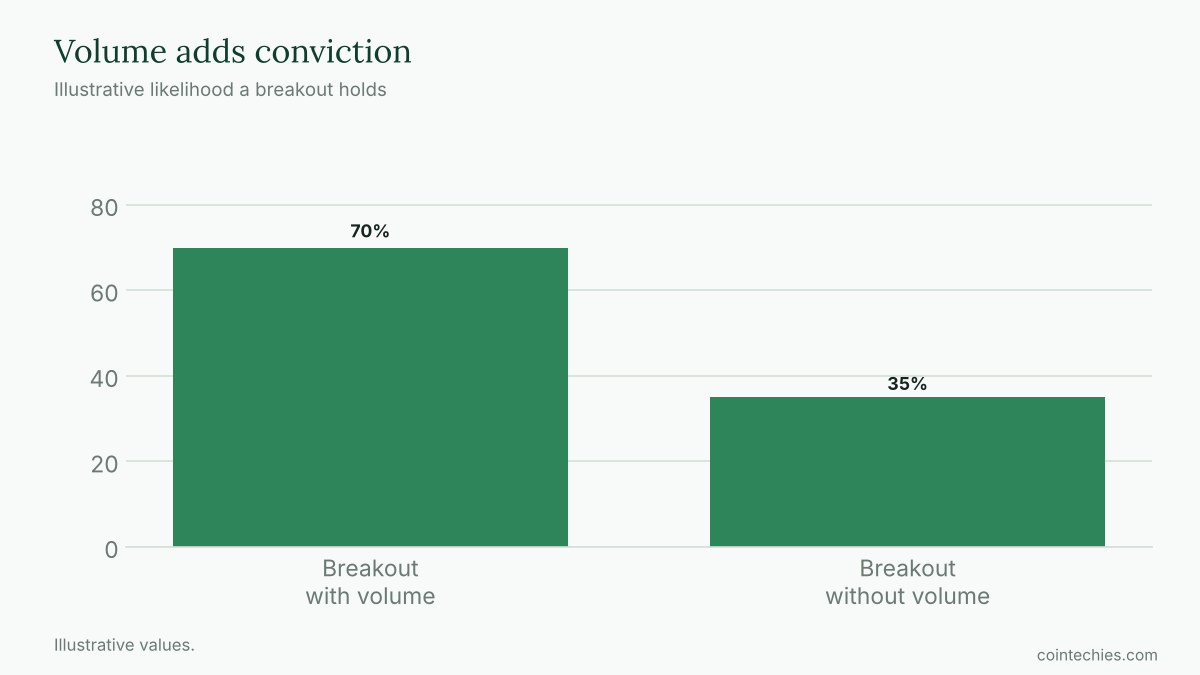
Breakouts
A move through a key level on high volume is more credible than one on low volume. Many failed breakouts lack volume.
Climactic volume
A sudden spike after a long trend can mark exhaustion, when the last buyers or sellers give up. It doesn’t guarantee a reversal, but it is a flag.
Tools
- Volume moving average to compare today with normal activity
- On-balance volume which adds volume on up days and subtracts it on down days
- Volume profile which shows where most trading occurred at each price
Pitfalls
- Fake volume on small exchanges
- Differences between spot and derivatives volume
- Volume spikes around news that has no lasting effect
The bottom line
Volume is the market’s measure of conviction. Use it to confirm what price is showing, and be sceptical of moves that happen on thin trading.
This article is for educational purposes only and is not financial advice. Crypto assets are volatile and you can lose some or all of your investment.